The Era of Precision: The Thin-Bed System in Action
- Share
- Issue Time
- Jan 7,2026
Summary
This article explores the thin-bed system—from advanced mortars and precision tools to digital layout—enabling flawless, efficient large-format tile installation.

Part 1: The Rise of the Thin-Bed Method: From Process Innovation to Industry Standard
The Thin-Bed Method has become the mainstream process for modern tile and stone installation. Compared to the traditional thick-bed method, it utilizes specialized adhesives to reduce the installation thickness from the conventional 20-50 mm to just 3-8 mm. This process revolution is driven by multiple industry demands:
- Space Optimization Needs: With generally lower floor-to-ceiling heights in modern buildings, the Thin-Bed Method saves 2-5 cm of vertical space, offering significant advantages in high-rise buildings and space renovations.
- Material Performance Upgrades: High-strength, low-water-absorption tiles such as fully vitrified tiles, porcelain tiles, and slabs require stronger bonding systems.
- Construction Efficiency Improvement: The Thin-Bed Method reduces drying and curing time by over 50%, effectively accelerating project progress.
- Quality Control Standardization: It minimizes traditional issues like uneven cement-sand mortar ratios and hollow spots (drumminess).
 Thick-Bed vs. Thin-Bed Tile Installation
Part 2: The Core of the Thin-Bed System: The Co-Evolution of Materials and Tools
1. The Specialization of Material Systems
- Specialized Adhesives: Classified into standard, enhanced, flexible, rapid-setting types, etc., based on the application environment. Their polymer-modified formulations provide excellent bond strength, flexibility, and anti-sag properties.
- Interface Treatment Agents: Provide targeted pretreatment solutions for different substrates (concrete, gypsum board, existing tiles, etc.).
- Auxiliary Materials: Include supporting systems such as mold-resistant grouts and expansion joint materials.
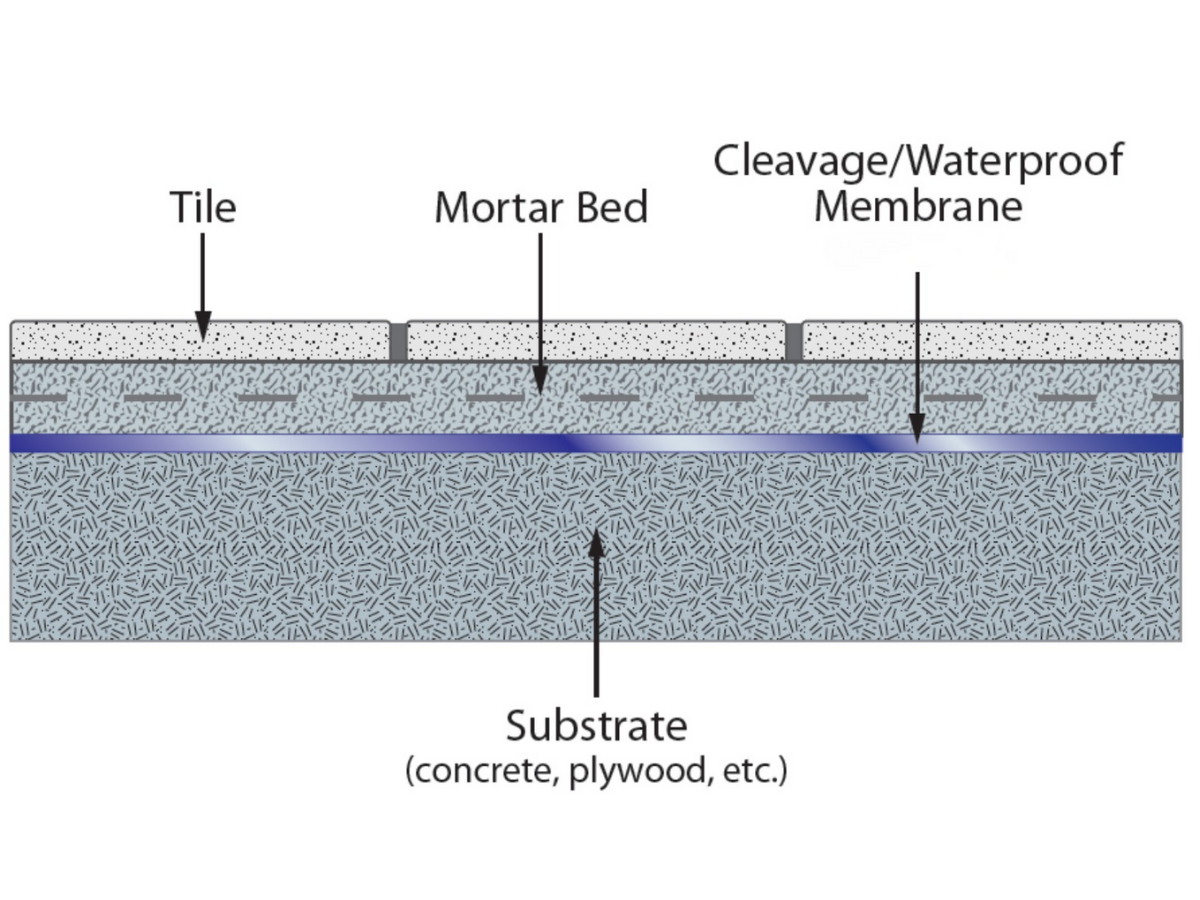 Key Components in a Thin-Bed Tile Assembly
2. The Precision of Tool Systems
The successful implementation of the Thin-Bed Method highly depends on specialized tools, which together constitute a complete operational system:
Substrate Preparation Tools
2-meter straightedgesLaser levelsMoisture meters are used to assess substrate flatness, strength, and dryness.
Electric grindersVacuum dust extraction systemsInterface treatment rollers/brushes ensure the substrate meets the "solid, flat, clean" standard.
Adhesive Application Tools
Electric mixers with specialized mixing paddles ensure adhesive is homogeneous and lump-free; mixing buckets with volume markings facilitate precise proportional mixing.
Application Tools: Notched trowel systems (different notch shapes correspond to different adhesive types and tile specifications), Double-buttering technique (ensures a buttering rate exceeding 95%), and Special application tools for work in special areas.
Installation and Leveling Tools
Large-format slab handling systems address the safe handling of large-format panels. Installation aids ensure consistent joints.
Leveling Systems: Include Mechanical leveling systems (clips), Knob/Cam-based leveling systems, and Hybrid systems for complex projects.
Finishing Tools
Include Grouting systems and Cutting and fabrication tools like electric cutters and waterjet systems to meet precision processing needs.
Part 3 & 4: Process Standardization & Industry Trends
| Phase / Aspect | Key Points / Trends | Tools / Methods Involved |
|---|---|---|
| Preparation Stage (Key Control Points) |
|
StraightedgesLaser LevelsMoisture MetersMixers |
| Construction Stage (Technical Points) |
|
Notched TrowelsVacuum LiftersLeveling Systems |
| Technology Trends (Integration & Innovation) |
|
AR DevicesRobotic ArmsSmart Tools |
| Material Trends (Science Advances) |
|
Specialized AdhesivesFunctional Coatings |
Part 5: Challenges and Coping Strategies
Common Problems & Solutions
- Hollow Spots: Mainly from improper substrate prep or incorrect adhesive open time control.
- Flatness Deviation: Mostly due to uneven substrate or improper leveling system use.
- Uneven Joints: Usually from incorrect installation sequence or positioning tool use.
Industry Constraints
Higher initial investment, underdeveloped training systems, and lack of unified quality standards.
Part 6 & 7: Future Outlook & The Chinese Market
Future Development Directions
- Full-Process Digitalization: Digital management from design to acceptance.
- Tool Intelligence: Smart tools with sensors for real-time quality monitoring.
- Construction Industrialization: Factory prefabrication combined with on-site thin-bed installation.
- Material Circularity: Development of detachable, recyclable systems.
Digitalization and intelligence are the future of construction techniques.
Chinese Market Snapshot
Penetration: Near 100% in top-tier commercial projects, >60% in 1st/2nd tier city home renovation.
Drivers: Policy/standards, slab material popularity, consumer value recognition.
Supply Chain: Vibrant competition among international and domestic brands for both materials and tools.
Core Challenge: Shortage of systematically trained "industrial workers".
Conclusion: The popularization of the Thin-Bed Method epitomizes the tiling industry's transformation towards refinement and high value-added services. Mastering this system is key to future market competitiveness. The Chinese market, as both the largest application field and an emerging source of innovation, will significantly influence its global evolution towards greater digitalization and sustainability.