From Workbench to Centipede: The Evolution of the Large Format Slab Workbench
- Share
- Issue Time
- Aug 19,2026
Summary
TILER centipede workbenches use adjustable legs to level any floor for large slab handling. OEM/ODM leg configs 4–18 for distributors worldwide.

The 1600 × 3200 mm slab did not just change tile sizes. It changed the furniture.
The Traditional Way: The Assembled Workbench
For decades, the standard was the assembled work table: a solid frame with a flat working surface on top. TILER’s TB-3 workbench is a classic example — an aluminum tabletop with a 250 kg load capacity, available in 180 cm and 360 cm lengths, built for measuring, cutting and laying large tiles in a fixed workshop position.
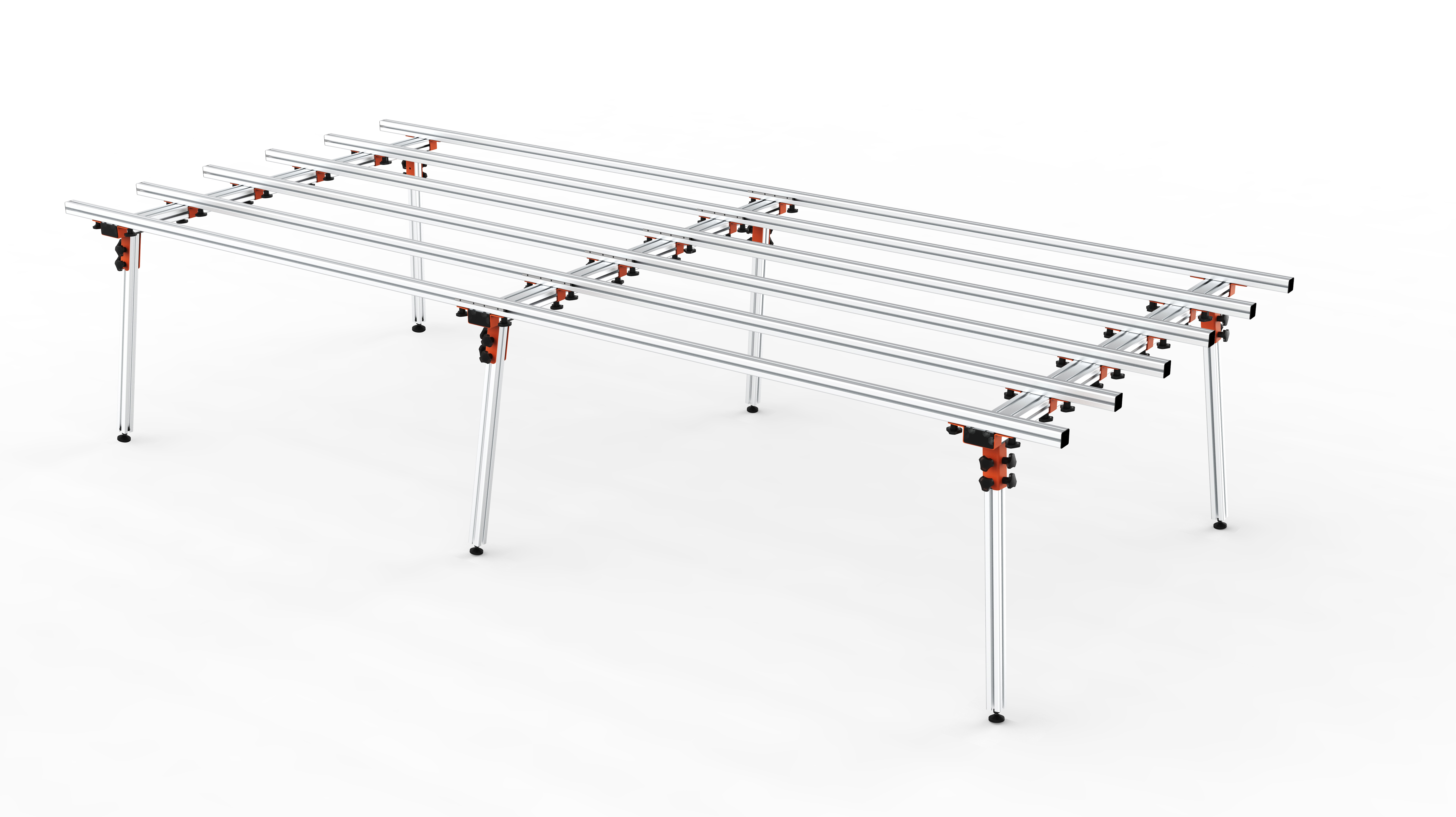
TILER DB-TB-3 — the traditional assembled workbench
The assembled table does its job well. The continuous surface gives you a stable reference plane for scoring, cutting and squaring, and the aluminum top stays flat and true for years. If you work in one place, it is hard to beat.
But the table has limits that only become obvious when the slabs get bigger and the jobs get mobile.
Three Problems the Traditional Table Could Not Solve
- Weight and transport. A rigid table is heavy, and it does not fold. Moving it between job sites means a truck, two men and half an hour of setup.
- Height is fixed. Different workers, different tasks — cutting, laying, sorting — want different working heights. A one-piece table gives you one height.
- Flat floors are a luxury. On real job sites, floors are rarely level. A rigid table rocks on uneven ground, and a rocking slab is a cracked slab.
None of these are design flaws. They are simply the limits of a one-piece structure. To solve them, the workbench had to stop being one piece.
The Centipede Concept: Many Legs, One Flat Plane
The centipede workbench takes the opposite approach. Instead of a solid tabletop carried by four fixed legs, it uses a series of individual support legs, each adjustable, arranged along the slab — like the legs of a centipede.
The centipede principle — many independent legs
Each Leg Adapts to the Floor
Every leg adjusts independently, so the whole plane stays level even on uneven ground. This single feature prevents more cracked slabs than any other improvement in workbench design.
Load Is Distributed, Not Concentrated
Instead of four support points, a 15-leg bench spreads the slab’s weight across many points. There is no center sag, no flex under the scoring line.
Scale Follows the Slab
A 1200 mm slab needs six legs. A 3200 mm slab needs fifteen. The bench grows with the job instead of forcing the job to fit the bench.
It Packs Flat and Travels Light
Legs collapse into a bundle that fits in a van. Setup is minutes, not an afternoon.
TILER’s Centipede Family: Leg Count as a Specification
TILER builds the centipede concept across a full range, with leg configurations from 4 to 18 legs:

TYF-DB-TB-4 — 15-Leg Factory Standard
The ready-to-ship configuration for distributors who want a proven, fixed specification.
15 legsFactory direct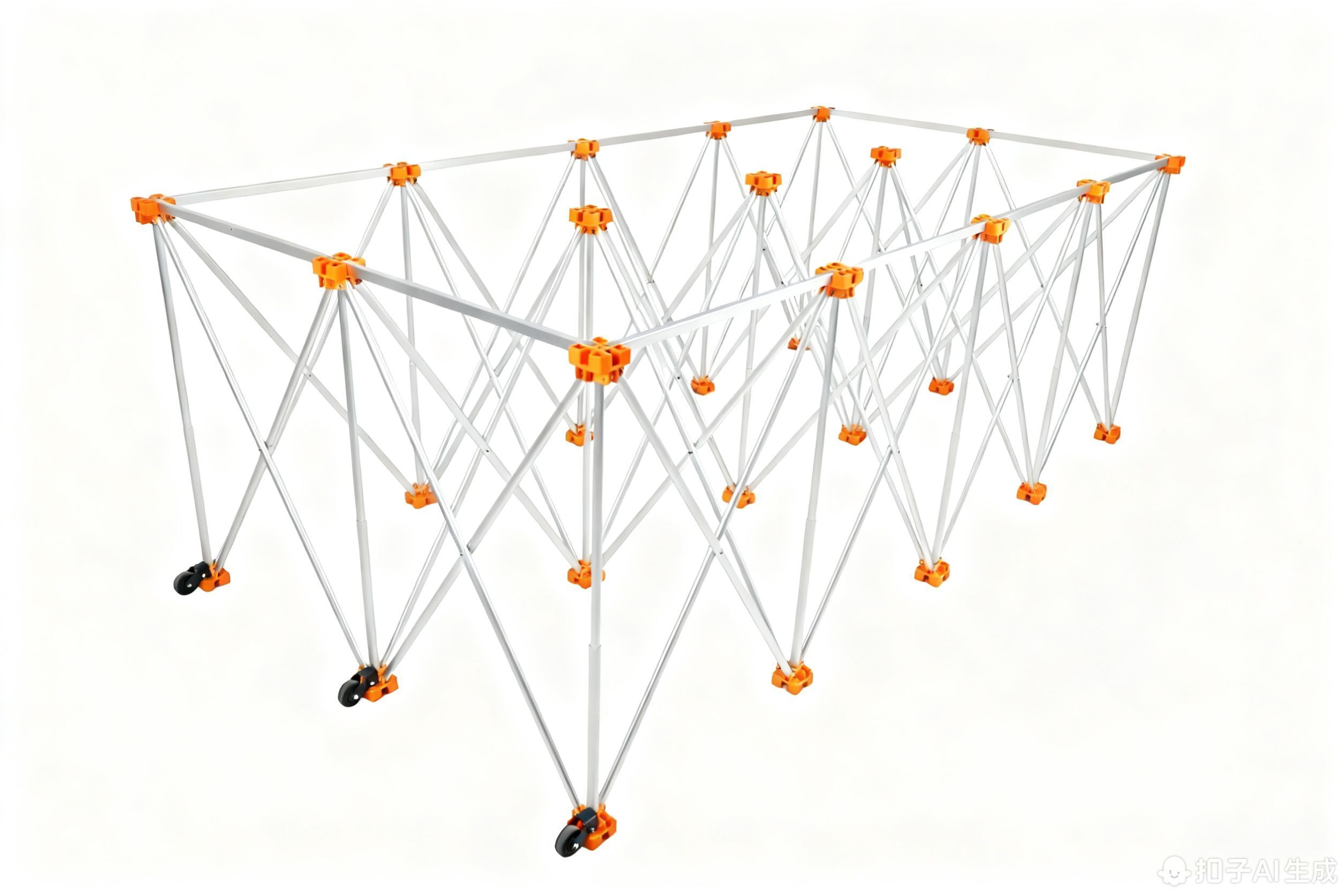
TYF-DB-TB-5 — Configurable 6 to 18 Legs
Matched to your most common slab sizes. Ideal for OEM/ODM programs that serve mixed-format markets.
6 legs8910121518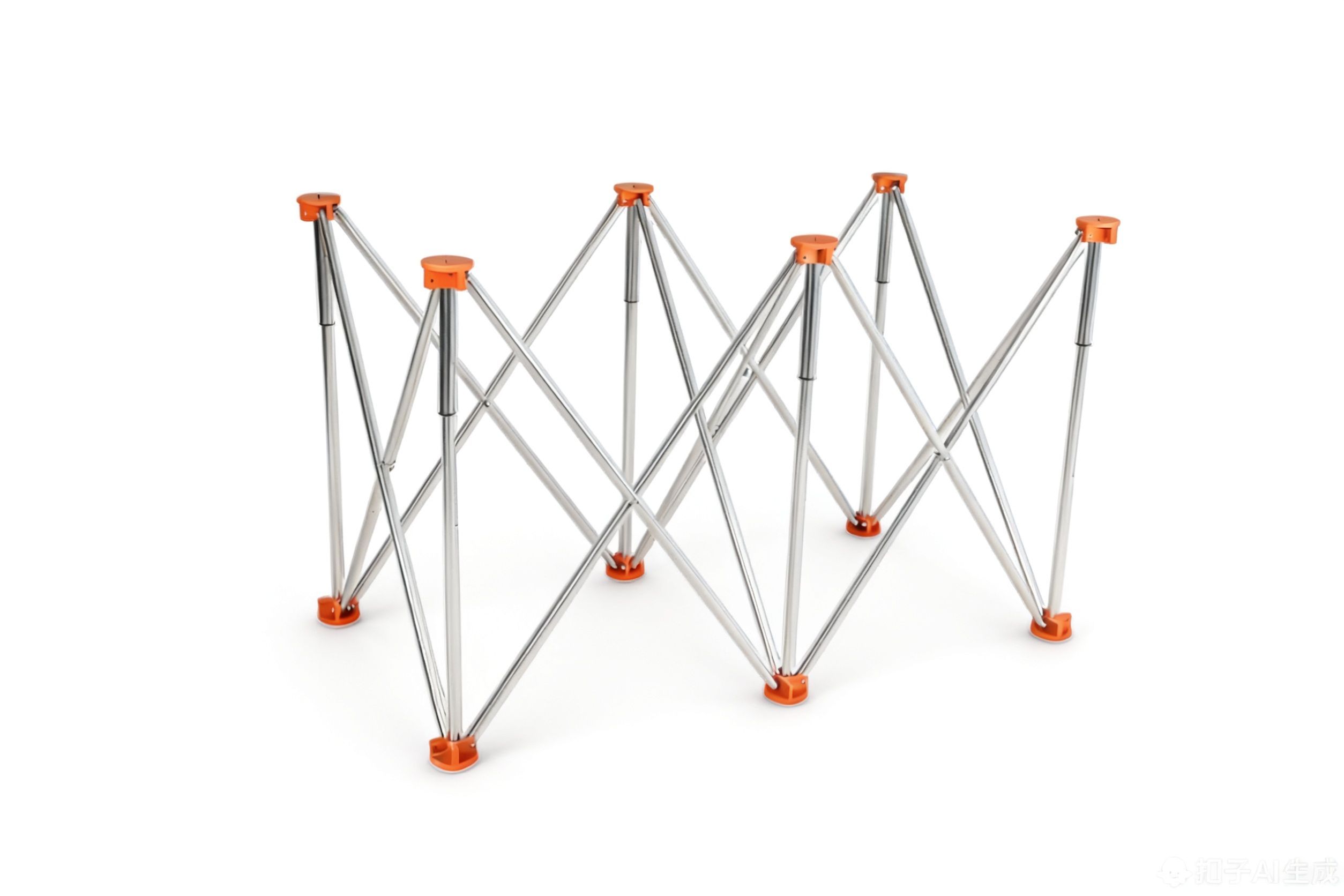
TYF-DB-TB-6 — From 4 Legs Up
The entry point for smaller formats and mobile teams that still need a stable, adjustable plane.
4 legs689101215TYF-DB-TB-7 — Full Range 6 to 18 Legs
Built for bulk distribution programs where leg count is specified per market and per slab size.
6 legs8910121518The leg count is not a cosmetic choice. It is the engineering answer to three questions: what slab sizes you handle, how many workers you have, and how your work moves between sites.
Table or Centipede? A Practical Decision Guide
| TB-3 Assembled Table | Centipede Workbench | |
|---|---|---|
| Best home | Fixed workshop | Job sites, showrooms, changing locations |
| Surface | Continuous aluminum top | Independent adjustable legs |
| Load | 250 kg capacity | Scales with leg count |
| Height | Fixed | Individually adjustable |
| Transport | Truck + assembly | Packs flat in a van |
| Best for | Daily production cutting | Large format handling on site |
The honest answer: most professional operations end up with both. The table handles the daily cutting line. The centipede goes where the slabs are.
Why This Evolution Matters for Your Business
For distributors and OEM/ODM partners, the centipede workbench is more than a product — it is proof of a manufacturer that designs for real job site conditions. TILER has spent 30+ years building tile handling equipment for professionals in 140+ countries, and the shift from table to centipede is exactly the kind of engineering response our customers expect: solve the problem the slab creates, not the problem the product already solved.
Custom leg configurations and OEM/ODM programs: contact us for specifications and lead times.